One thing that spending 4 to 6 hours a day on your bike during a 7 day bikepacking trip (Jacksonville to Ft Lauderdale) gives you is the ability to spend lots of time thinking about things.
As I have said in other posts, this blog is about bikes, boats and urbanism and occasionally what I did for a day job and certainly never about politics. So while this post is ostensibly about NASA, it does touch on the current political scene because NASA is inherently a political entity as part of the US Government. This is a facet of NASA that I almost entirely avoided because I am a technical guy with no appetite for politics, and I was frankly too low on the totem pole to ever have an opinion that carried any weight in the political arena. But with now a fair bit of water under the bridge and watching what’s happening to NASA currently, I thought I would jot down some thoughts for the record, which will allow me to compare these comments with what actually happens even further downstream.
Let me get this out of the way upfront: fortunately, I retired at the right time almost four years ago with the ability to get out on my own terms with no ill feelings anywhere. I am confident that were I still there, I would be able to shift directions with the changes in the agency that are happening now (assuming I was not summarily dismissed, a very distinct possibility). I did it multiple times as conditions changed over my 35 years there and was happy to move on to something different as a new challenge. I never wanted to be “that guy” who could not see things differently. Again, that’s one of the great things about being a utility ball player, you don’t get so invested and stuck in one particular area that it makes moving on really hard. I think that is a feature of places full of experts, and why it’s so hard to get bureaucracies to change. It’s like throwing the helm of a 1000’ freighter over, it takes a long time for it to start turning. But, I’m getting ahead of myself.
What’s going on currently at NASA (and the rest of the Federal Government) is a complete wrecking ball. Very unsubtle and very unnuanced. Even though I don’t like it, I do understand why they are doing it this way – the 1000′ freighter metaphor is very much appropriate – there is a lot of resistance to change and this is probably the only way to do it fast. However, I do think the agency is at an inflection point that has been a long time coming and the current political situation is just a catalyst, albeit a very strong one. What we do and how we do it has been changing and the culture and skill set of the agency in many ways has not changed along with it. I think the Artemis program, specifically SLS and Orion, is the poster child for that issue.
I don’t really know what’s going to happen with other areas of NASA any more than any other lay pundit. For areas such as the space science efforts I would imagine planetary science and astrophysics will be reduced due to general budget reductions, loss of employees and pausing on R&A grants due to the DEI bruh ha ha and a general punitive attitude towards scientists and elite universities that this administration is stupidly focused on for perceive slights. And for earth science, much of that is related to climate science which this administration is going to summarily kill for ideological reasons and will likely combine and/or privatize the weather measurements that are made in collaboration with NOAA. Aeronautics and technology development have always been the Agency bastard children, so will no doubt experience the DOGE chain saw and further privatization efforts. But what’s happening with the human space flight efforts – this is essentially half of the NASA budget – is what I am going to comment on because that’s where I spent all of my time at NASA. In no way do these comments take away from the work I or my colleagues did, as hinted at above, we always did what the Agency asked us to and we did some great work to make things run as efficiently as possible under those conditions.
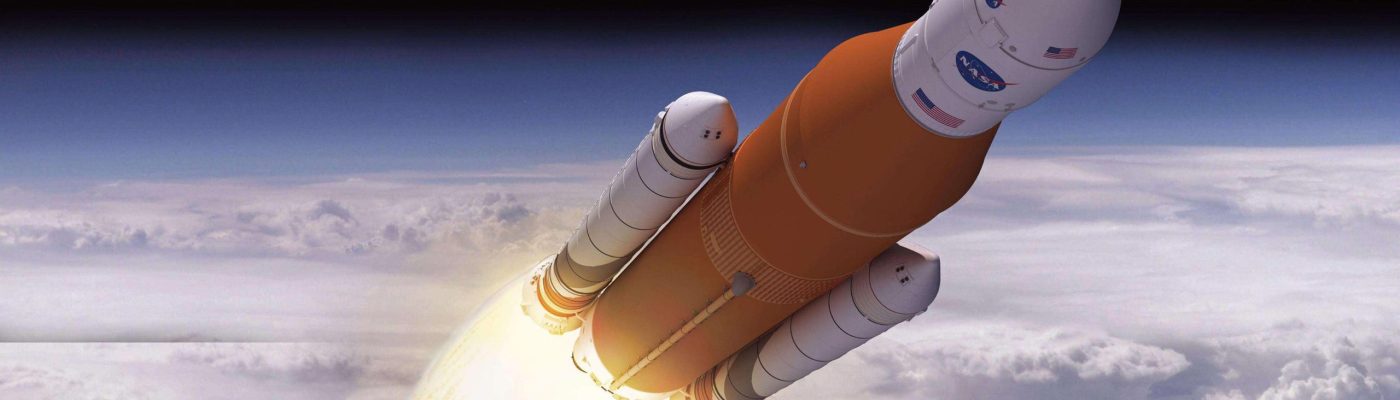
Artemis and Gateway, while very ambitious, are very heavy programs (in all respects: cost, programatics/architecture, culture) that I’m not sure are going to survive the budgetary constraints and the wrecking ball. The cost and “bang for the buck” issues especially around Artemis are no surprise given that it is made up of two of the last of the big agency cost plus fixed fee development contracts with traditional aerospace companies (Orion capsule/Lockheed Martin and SLS rocket/Boeing) which have turned out to be money pits, schedule killers and performance disappointments. Gateway (the Earth/Moon transfer station) is a construct that was needed because of SLS/Orion performance issues, so if SLS/Orion go away, Gateway goes with it. As an added incentive, we have clearly antagonized our space partners (primarily the Europeans who are a critical Gateway partner) so that is likely to come apart.
What emerges will be interesting to see. SpaceX along with other commercial partners who are funded through public private partnerships have been hugely successful in providing great services at a much lower cost. This “New NASA” is clearly the way to fund these kinds of development projects. If Musk were not heading up the DOGE effort and kept his wacky, spectrumy (and sadly autocratic fascist leaning) personality out of the Federal Government, I would be much more sanguine about SpaceX leading a lot of this new way of exploring, but clearly the current situation brings a lot of that into question from a conflict of interest standpoint; his outsized influence provides many perverse incentives that may not be in the Agency’s best interest.
The real issue that NASA has, and has had, with Human Space Flight since the Apollo missions is that it is such a part of the Agency’s DNA (and budget) that with the costs of the current programs, you can’t live with it and because it is such a visible part of what the Agency does that people see and get excited about, you can’t live without it. What replaces the current programs as the “New NASA” and whether it is successful or ends up being just another failed effort like the Constellation Program of the mid 2000s, remains to be seen. But regardless, I don’t think the aforementioned Moon/Mars exploration program is going to survive in current form. I think we will look back on this history and see the Artemis 1 mission as essentially the apex of the “Old NASA”.
NASA is dead, long live NASA.
 Team Pline